Born in 1933 – Henryk Górecki, Polish composer and academic.

Do yourself a favor and listen to Górecki’s Third Symphony, composed in 1976.

This “Symphony of Sorrowful Songs” consists of three movements: A 15th-century Polish lament of Mary, mother of Jesus; a message written on the wall of a Gestapo cell during World War II; and a Silesian folk song of a mother searching for her son killed by the Germans in the Silesian uprisings.

The first and third movements are written from the perspective of a parent who has lost a child, and the second movement from that of a child separated from a parent. The dominant themes of the symphony are motherhood and separation through war.


Born in 1898 – C. S. Lewis, British novelist, poet, and critic.

From Lewis’s 1956 novel, Till We Have Faces:

“Holy places are dark places. It is life and strength, not knowledge and words, that we get in them. Holy wisdom is not clear and thin like water, but thick and dark like blood.”

“I know now, Lord, why you utter no answer. You are yourself the answer. Before your face questions die away. What other answer would suffice?”

Above: Detail of the cover image of the 1980 edition of Till We Have Faces.

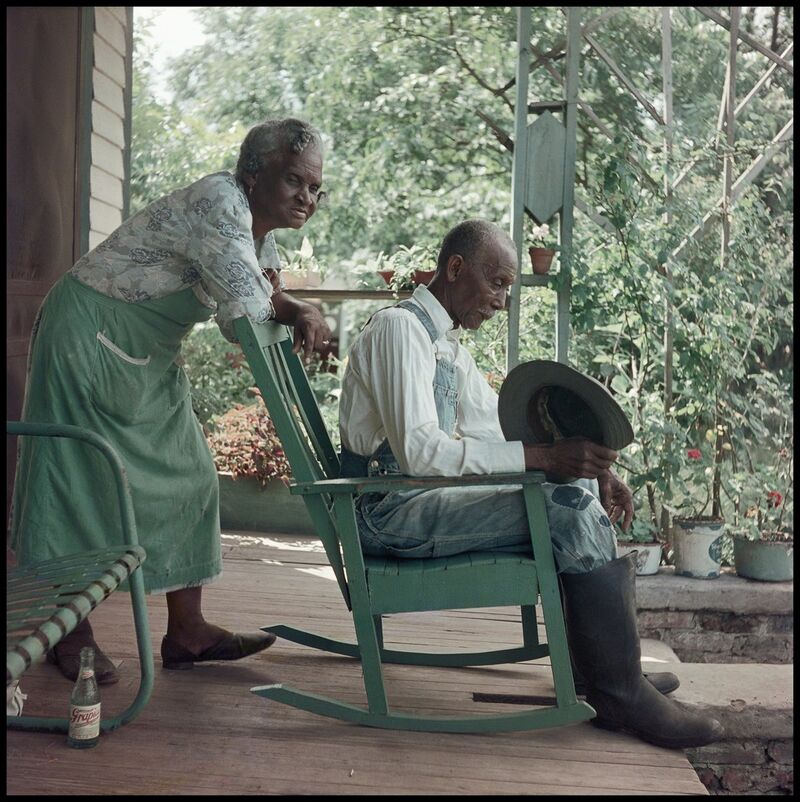
Born in 1935 – Les Blank, American documentary filmmaker.

“You go out and find some interesting people. You get to know them and film them, and you make something that says something about who they are; you learn to make movies that have some meaning.”

Above: Texas blues musician Mance Lipscomb, in a still from Blank’s 1970 film A Well Spent Life.

Born in 1909 – Eugène Ionesco, Romanian-French playwright and critic.

“The supreme trick of mass insanity is that it persuades you that the only abnormal person is the one who refuses to join in the madness of others, the one who tries vainly to resist. We will never understand totalitarianism if we do not understand that people rarely have the strength to be uncommon.”

Previously: Ionesco

Above: Photograph by Ida Kar (1960), from the National Portrait Gallery in London.